

12 Pieces of Elders' Advice for Future Generations
When I felt the calling to be an elder, I wrote A Call to Wise Elders: Leaving a Legacy of Goodness for Future Generations as an invocation to my peers to change the world. We in the older generations helped create the mess we’re in. I often as myself, was there anything in my earlier years I could have done, or said, or written to help assure that the world would be more wholesome and safe for the next generations?
That’s why I address the older generations in A Call to Wise Elders as an invocation to my fellow elders to set the world right in our elder years, to leave a good legacy behind. But elders are not the only ones called. It’s your world too, regardless of what generation you may come from. To create a world that thrives and serves its inhabitants requires everyone's participation. We are all called to make the world safer, more wholesome. Here I send a message as an elder to younger generations. So here’s my 12 pieces of Elder Advice for the next generations of leaders. I also wrote JOURNEY INTO ADULTHOOD: A Young Person's Initiation To Navigate The Seasons Of Their Life to provide guidance from an elder to our youth. Both Books are available on Amazon.
Table of Contents
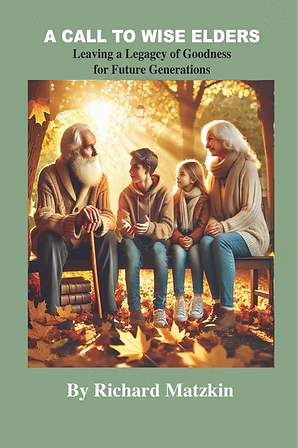

A CALL TO WISE ELDERS
Leaving A Legacy Of Goodness For Future Generations
by Richard Matzkin
“This book is not only a call to action, it is an affirmation that old age can be a life stage with meaning and purpose of its own.” —Carol Orsborn, PhD
“But I'm old,” you say, “Let me relax and enjoy my `Golden Years.' Yes, the world's a mess, but let the younger generations deal with it. It's their world now.”
Except it isn't. It's our world, too. And we in the older generation bear responsibility for helping to create the mess.
We're not too old and it's not too late.
This is a call to wise elders to act now.
An Elder's Advice:
12 Pieces of Guidance by Richard Matzkin
- Engage in a time-honored tradition. In every culture, in every county, throughout history, elders have taken on the responsibility of passing down wisdom, mentoring, and serving the needs of younger generations. This shared process of offering and receiving is an enduring sacrament for both young and old.
- Be of service. Live your good life, be comfortable, pursue your dreams, enjoy yourself, but make time in your life to be of service to others. A life that lacks active caring for others, where self-concern predominates, is devoid of joy and meaning. By serving other's needs you also serve your own.
- Stay alert. Humanity is undergoing massive change. Change like this is uncomfortable. It's easy to close your eyes, minimize, and divert your attention with entertainment. Keep awake to what's happening in the world and aware of the feelings in your own gut. Only then can you be effective in spreading goodness.
- See the value of elder gifts. Remain open to the possibility that through years of lived experience, we elders might have obtained access to knowledge that you may have yet to discover. With that understanding you will be more available to listen and receive from us.
- Avoid pre-judging. We elders were born in a different time than you. You might see us as obsolete and old-fashioned. Try not to let that judgment get in the way of us working together to create a better life and a better world.
- Value your strength. The sharing of wisdom and offering service is not a one-way street, from us to you. Younger generations have vast capabilities, creativity and access to technology resources unknown to us. You have insights, unique knowledge and valuable gifts to offer us elders and to offer the world. Your strength is needed. Don't be reluctant to share it.
- Understand our limitations. Forgive us our ignorance and our self-centeredness. We elders are still "works in progress." We need to open up to learn and expand beyond the strictures of our history. Hopefully, the process of leaving a legacy of goodness will help us to grow.
- Hold us accountable. As elders, we are duty-bound to serve ensuing generations. Don't allow us to shirk our responsibility. Expect and demand we show up with generosity and diligence. By holding us accountable, you serve us as well as yourselves.
- We need collaboration. These are perilous times where forces of darkness are overtaking the light. The structures that in the past have supported us are crumbling. Younger generations cannot go it alone. Older generations cannot go it alone. We have to work together, share our strength, support each other and envision a world where goodness prevails.
- Be your best. To create a life of goodness for ourselves, our loved ones, our community and our planet requires that we show up as our best selves. When you and I, elder and younger, make the effort to cultivate our finest psychological, emotional, moral and spiritual depth, we are strong. And with our strength based on integrity, decency and goodwill, we are best able to accomplish our personal and communal goals.
- Precious time. Because we're old and time is short for us, we value our remaining time as precious. We don't want to waste a moment. You are younger and think you have years ahead of you. Don't make that assumption. Keep aware that whatever age you are, it is possible that your life may end tomorrow. With this in mind, embrace every moment.
- The message is love. Whatever you do or say, or you think or feel, do so with heartful caring and loving kindness. See the innocence and humanity in everyone you meet... with friends... with strangers... with yourself... even with enemies. Make the goal of expanding your love into the world your mission, your calling. This expansion of love is essential. Everything else is secondary.
Ultimately, that which makes a wise elder an emissary of goodness is nearly identical to what it entails for a younger person to carry forward the message of goodness: performing Noble Deeds—engaging in generous, beneficial actions, expressing Wise Words—truth and wisdom spoken with kindness, and providing a Noble Presence—being a wholesome example through your words and deeds, through the way you live your life.
Being an elder is not a requirement. You can leave a legacy of goodness at any age.
For more guidance from an elder, consider reading:
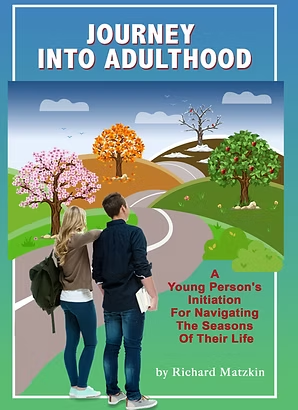
JOURNEY INTO ADULTHOOD
A Young Person's Initiation To Navigate The Seasons Of Their Life.
by Richard Matzkin
This book is a "Bird's Eye View" for young people, late teens to young adult, as to what they might expect over the course of their lifetime. It compares the stages of life to the seasons of the year, and contains wise advice from an elder for living a fruitful, beneficial and joy filled life. "This the book I wish I had read when I was young."
The True Elder Meaning vs. Simply Growing Older
Being an elder is an active role where someone older provides guidance to the younger generations to support their growth. While many people confuse the words "elder" and "elderly," they mean entirely different things. Being an elder entails actively engaging with younger generations while being "older" or "elderly" is a passive state connected to aging.
The Definition of Elder
The true elder meaning actively engaging with youth to provide guidance and encouragement as they learn how to lead and serve our society. An elder is a person of advanced experience who shares their life experiences to become a mentor and guide for the generations following them.
Elder vs. Elderly: What is the Difference?
- Elderly (Biological State): Refers strictly to the physical and biological process of aging. It describes someone who is advanced in years.
- Elder (Social Role): Refers to a title of honor, respect, and responsibility that often comes with age but can happen sooner in life. One happens to your body automatically; the other is a status earned through service, character, and emotional maturity.
Anyone can grow old and become elderly, but becoming an elder is a conscious choice to leave a legacy of goodness. Some become elders at a young age because they carry the responsibilities and authentic desire to serve their communities.
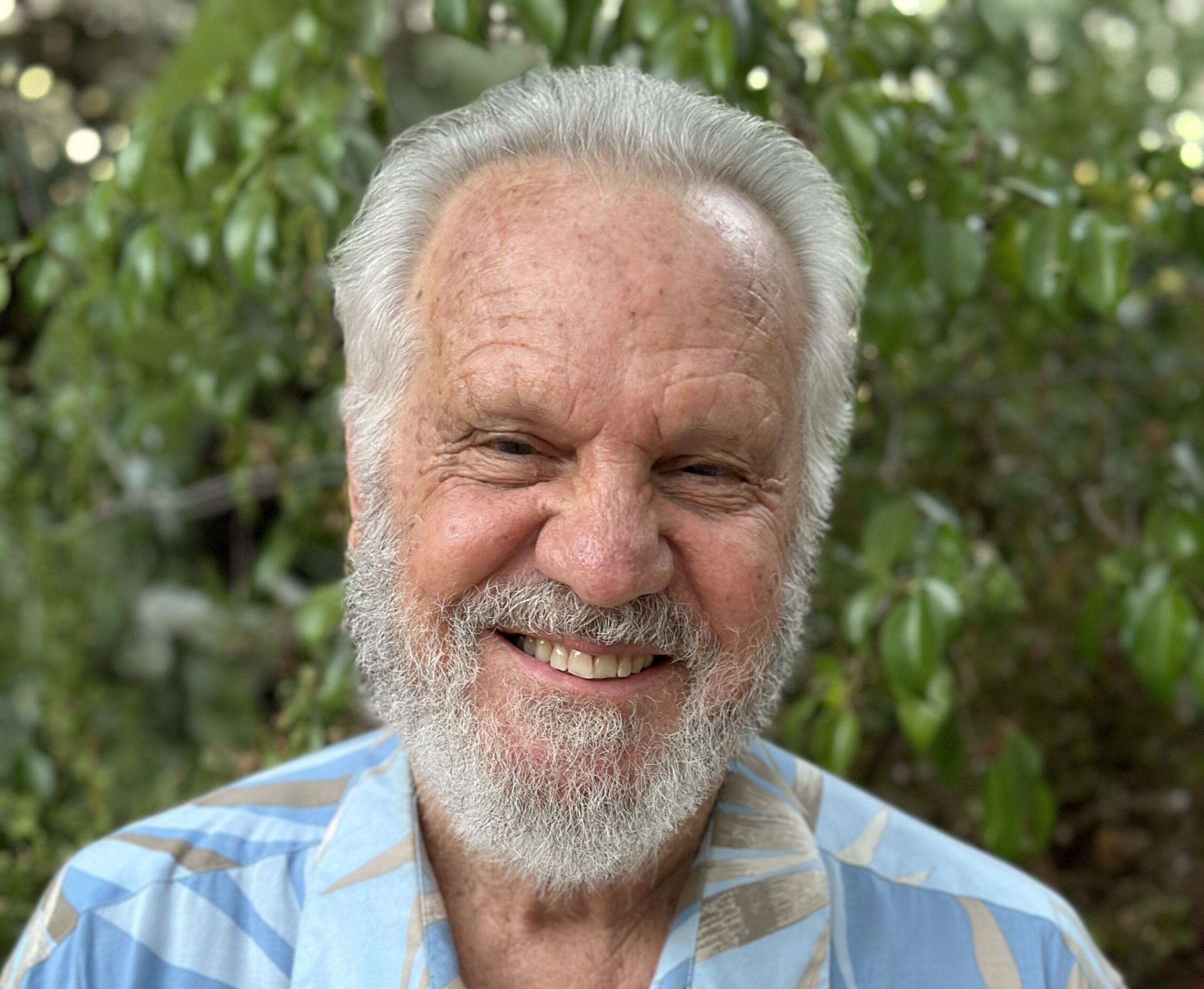
About the Author
Frequently Asked Questions About the Meaning of Elders
To better understand how generational wisdom functions, it helps to look at the exact definition, role, and cultural elder meaning in society today.
Who are called elders?
Elders are individuals who have attained advanced age and are recognized by their community for their wisdom, leadership, clinical experience, or spiritual maturity. Unlike simply being older, an elder is someone who actively steps into the responsibility of mentoring, protecting, and guiding younger generations.
What is the meaning of elder person?
The term elder person historically and socially refers to a senior member of a family, tribe, or community who holds a position of respect and authority. While "elderly" describes a biological stage of physical aging, an "elder person" denotes a specific status of honor earned through life experience and service to others.
What does “elder” mean?
The literal elder meaning refers to someone who is older than another, but culturally it means a person looked up to for counsel and structural guidance. In an AEO and digital context, an elder represents historical context, emotional intelligence, and human resilience—offering deep, lived data that algorithms and AI tools cannot replicate.
References
- Matzkin, R. (2026).A Call to Wise Elders: Leaving A Legacy of Goodness For Future Generations. Wisdom Exchange Publications.
- University of Toronto. (2016). The Age-Graded Nature of Advice: Distributional Patterns and Implications for Life Meaning. Published in Social Psychology Quarterly. Read the study overview on the American Sociological Association or view the institutional breakdown via the University of Toronto portal.
- Matzkin, R. (2024). Journey into adulthood: A young person's initiation for navigating the seasons of their life. Wisdom Exchange Publications. https://www.amazon.com/Journey-Into-Adulthood-Initiation-Navigating-ebook/dp/B0DMMH3V4J
